

Of 7,856 early action applicants, Yale College admitted 709 students to the Class of 2028 — the lowest early acceptance rate in the history of Yale’s current nonbinding early action program.
Yale Daily News
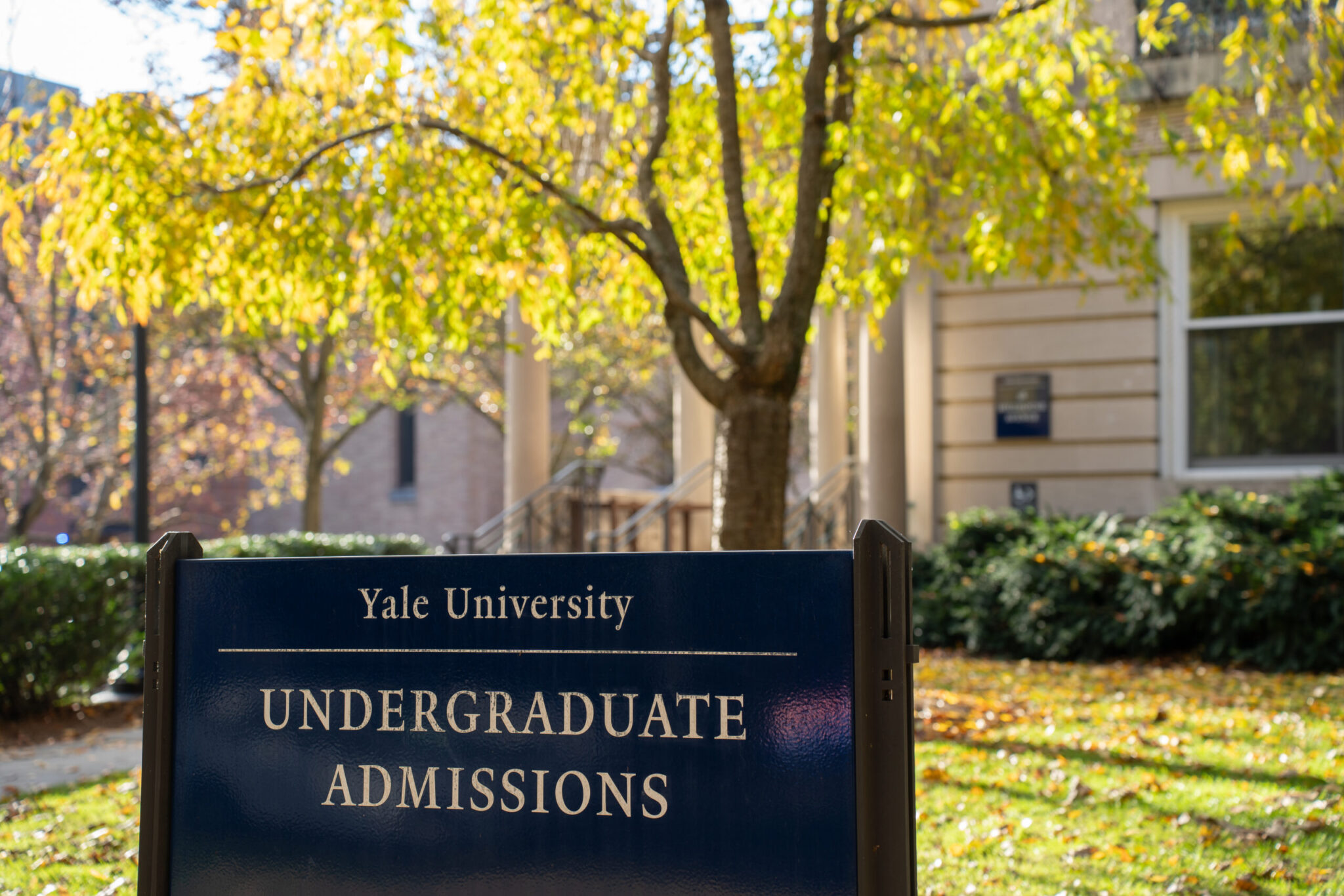
Ellie Park, Photography Editor
On Thursday evening, 709 students updated Yale College’s applicant portals with the news that they had been offered a spot in the college’s Class of 2028.
The acceptance rate of 9.02 percent is the lowest in more than two decades. Of the remaining applicants in a pool of 7,856 students, 20%, or 1,531 students, were deferred to the regular decision pool; 70%, or 5,537 students, were denied admission, and 1%, or 79 students, withdrew their applications or submitted incomplete applications.
The 70% of rejected applicants represents the highest percentage of early action denials in at least six years, when the Class of 2022 received early action decisions. The acceptance rate of 9.02 percent is the lowest since Yale adopted the current non-binding early admission model, which first took effect with the class of 2008.
Because Yale practices a non-binding early admission model, the 709 accepted students are not required to enroll at Yale College and instead must accept or decline a Yale offer by May 1. Deferred students will be reconsidered during the regular decision cycle and will receive their admission update on March 28; Applicants must also accept or decline their offers by May 1.
This application cycle marks the first time in modern history that admissions officers have not had access to students’ racial identities while evaluating their applications, since the Supreme Court declared racially-based college admissions Contrary to the constitution Last June. In addition, admissions officers will not have access to information about the racial demographics of Total Applicants pool even after all admissions decisions have been made.
In September at the university Announce It will make several changes to the admissions process in the wake of the downfall of affirmative action. Among them was the incorporation of new location-based data from Opportunity Atlas, a national mapping project that measures economic mobility. The university wrote in a Dec. 14 news release that the data from the Opportunity Atlas complements the information from the College Board report Aesthetic view The tool, which has been part of Yale’s admissions process since 2017.
“Admissions officers have found that the data improves the committee’s assessment of applicants from low-resource areas and has contributed to a rapid increase in enrollment rates of low-income students,” the university explained in a press release issued about today’s admissions decisions. “The first-year class that arrived in New Haven in August includes more than twice as many first-generation college students and students eligible for federal Pell Grants for low-income families than the class that arrived in 2013.”
Earlier this year, the admissions office was also appointed Two full-time employees To increase engagement with college access organizations and enhance student-focused outreach programs.
This cycle continues what is now a Four-year trend Yale College is rejecting more early applicants than it is deferring, as first reported by The News last year.
Data indicate that the admissions office previously preferred to postpone final application calls until the regular decision date in the spring. But starting with the class of 2025, the office began moving toward rejecting a larger share of early action applicants itself. Jeremiah Quinlan, dean of undergraduate admissions and financial aid, attributed this change to two primary factors.
“First, increased orders,” Quinlan told the News last winter. “Postponing the application means that the committee will have to reconsider the application from now on… [so] We are pushing ourselves to make more final decisions in the early application round. The second thing is that we’ve heard from our colleagues in high schools across the country that it’s helpful to submit final decisions early.
All accepted students will be invited to visit campus in April Bulldog days, an annual three-day placement program for prospective Yalies students, or Bulldog Saturday, a one-day program that provides similar exposure to on-campus academics and extracurricular students. The Office of Admissions also plans to put together virtual events and online communities to help new admits connect with each other and with current Yalies.
The Office of Admissions provides low-income families with financial support to participate in Bulldog Days; Last year, more than 550 students received travel scholarships, and the office booked more than 300 air, train and bus tickets for students nationwide.
In addition to being the first class of applicants to be evaluated based on race, the Class of 2028 may be the last to seek admission under the test-optional policy.
Due to testing interruptions during the COVID-19 pandemic, the college first implemented a test-optional admissions model in 2020 for students applying for the Class of 2025, and has renewed this model one year at a time since then. The admissions office told the News last year It had planned to decide on a long-term uniform testing policy last winter but then postponed its decision Until spring 2023 And again so Winter 2024. Now, Yale’s long-term testing policy is expected to be announced in the coming months, and the policy will first go into effect for applicants next year.
By the early action deadline of November 1, 7866 students I have applied. By the decision date of December 14, the number of early actions had fallen to 7,856 students. The admissions office recorded a similar discrepancy last year For students to switch between their chosen application round. Students who initially applied for Early Decision in the Early Round were allowed to move to Regular Decision before mid-December, while those who initially applied to the Regular Decision Round were allowed to move to Early Action before the EA’s November 1 deadline.
RD applicants must submit their applications by January 2 and will receive a response on March 28.
Earlier this month, the college also accepted 72 students into the class of 2028 through Quest Bridge College Matcha program that connects high-achieving high school students from low-income backgrounds to selective universities nationwide.
New Yalies who match through QuestBridge receive a financial aid award that covers the full cost of tuition, fees, housing, and meals. Yale also provides hospitalization insurance coverage and a $2,000 startup grant for each student’s first year.
Yale’s undergraduate financial aid policy mandates that the university provide all admitted students with 100 percent of their demonstrated financial need—which the university provides Allegedly Determined using its own formulas – regardless of citizenship or immigration status.
While students accepted through the QuestBridge matching program are required to enroll at Yale, both QuestBridge students and non-QuestBridge students accepted through the Early Action Program have until May 1 to make their final decision, Regular Decision recognizes.
Molly Reineman and Anika Arora Seth contributed reporting.
Yale University has long been known for its prestigious and highly selective admissions process, and this year’s early admission statistics have certainly solidified that reputation. With only 9.02% of early applicants being accepted, this marks the lowest early admission rate the university has seen in over two decades. The highly competitive nature of Yale’s admissions process is evident, making acceptance into the institution an even greater achievement for those fortunate enough to receive the coveted letter of admission. As one of the most esteemed universities in the world, Yale’s rigorous standards and limited acceptance rates only add to its allure for prospective students.