

The Office of Sustainability at Occidental College in Los Angeles, California, produced the first-ever extra virgin olive oil after hand-harvesting 130-year-old Mission trees on campus.
According to Alison Linder, the college’s sustainability coordinator, the olive picking season was inspired by a similar event at nearby Scripps College to create a hands-on learning experience and promote sustainability.
“I’m thrilled to support efforts like Olive Oil Harvest that put climate action at the forefront of campus life and show that we all have a role to play,” she told the Olive Oil Times.
See also:Small-scale farmers celebrate big success in Central California
““Our campus, located in sunny urban Southern California, is home to more than 125 fruit-bearing olive trees, respected by observers for their beauty and shade, and by grounds and sustainability staff for their drought and climate resilience,” she added.
While there had previously been interest in an olive harvest, the newly appointed Sustainability Office and a particularly wet winter created the perfect opportunity to coordinate a successful harvest and community event.
“The goal of Occidental College’s first olive harvest was multifaceted: first, to raise awareness of the climate- and drought-resistant landscaping practices used on campus; Second, creating a community around local food production; Third, to introduce our reimagined Office of Sustainability to the Occidental community.
The Office of Sustainability was recently revived due to interest from students, staff, board, and faculty in seeing a coordinated effort for sustainability planning and actions on campus in the face of the increasingly visible impacts of climate change.
Interest in her efforts was demonstrated by the approximately 75 volunteers from all areas of campus who helped pick olives at the event.
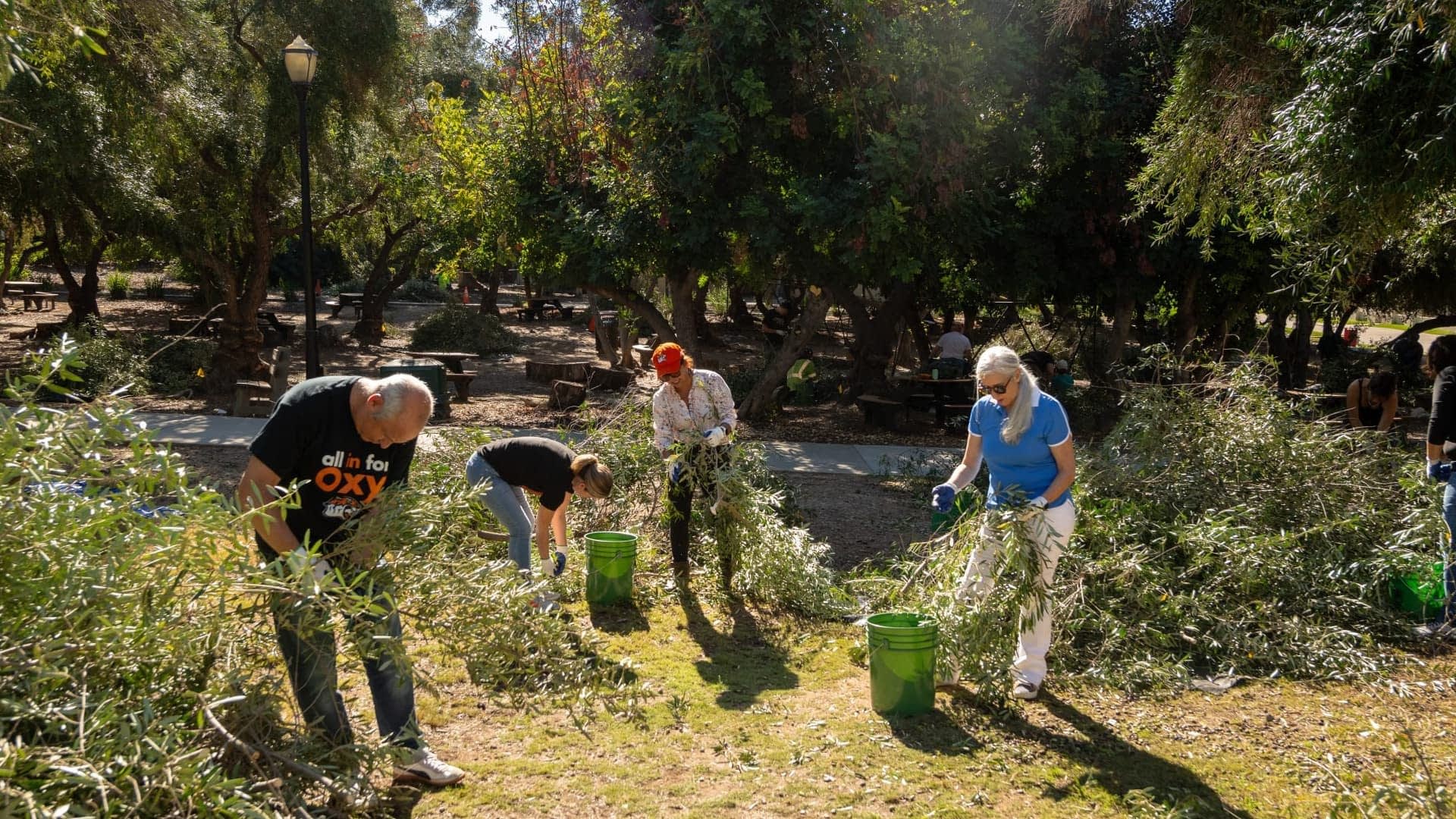
The mission’s olives were picked and 45 liters of olive oil were produced. (Photo: Mark Campos, Occidental College)
““It was amazing to me to see the amount of olives required to produce one gallon of oil, and many volunteers were surprised at the length of time it takes to fill a bucket,” Linder said. “In the Office of Sustainability, we hope this hands-on opportunity will lead to a greater appreciation for the products we consume.
Immediately after the harvest, Lola Trafficante, grounds manager for Occidental College, and Issa Merrill, assistant sustainability coordinator, drove olives two hours northwest to Ojai Olive Oil Company.
Ojai Olive Oil received 500 pounds (225 kg) of olives and transformed them upon arrival. The olives were ground into 12 gallons (45 liters) of olive oil within four hours of harvest.
““The newness of this momentous occasion brought an energy of excitement and enthusiasm to the campus,” Merrill told the Olive Oil Times. “I’ve had community members reach out to me that I would never have interacted with, telling me how excited they are about the harvest and thanking me for my hard work.
Occidental College’s olive grove is more than 130 years old and began when landscape architect Beatrix Farrand, one of the 11 founding members and the only woman in the American Society of Landscape Architects, planted four trees in 1936.
Over time, the orchard has expanded and now provides students, staff, faculty, and campus animals with shade to relax, study, and socialize, all while producing a viable crop for community use.
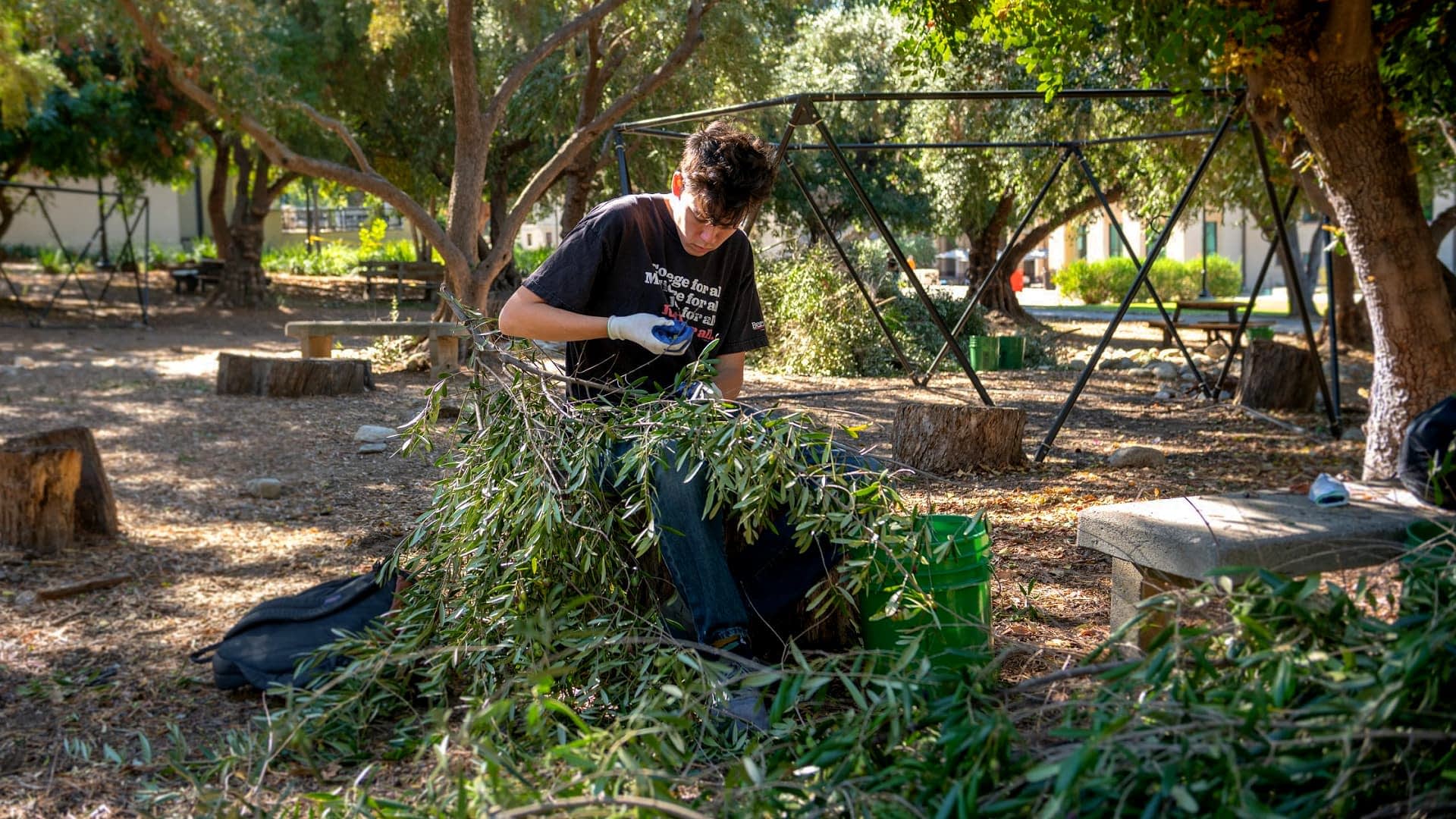
Organizers hope to turn the olive picking season into an annual multidisciplinary educational experience for students. (Photo: Mark Campos, Occidental College)
Olive trees, although not native to California, are incredibly resilient to high temperatures and drought, an increasingly necessary trait in campus landscaping as summers become hotter and winters drier due to climate change.
““We hope that through this inaugural harvest, by honoring the trees’ abundance, we have sparked a community-wide appreciation for their remarkable resilience,” Linder said.
In the future, college officials see the potential for continued research opportunities on soil quality, the sensory qualities of olive oil, economic impact, and increased environmental awareness.
A research partnership with biology and geology departments is also envisioned to test and remediate soil using regenerative practices to increase nutrient availability and water holding capacity.
For example, one project focuses on composting olive pomace on site to produce an all-natural fertilizer.
Occidental also hosts a minor in Food Studies, an interdisciplinary field of study that includes environmental policy, sociology, culture, religion, and kinesiology.
This interdisciplinary minor is an ideal platform for a research project directed at sustainable olive oil production and its health and societal benefits for Occidental College.
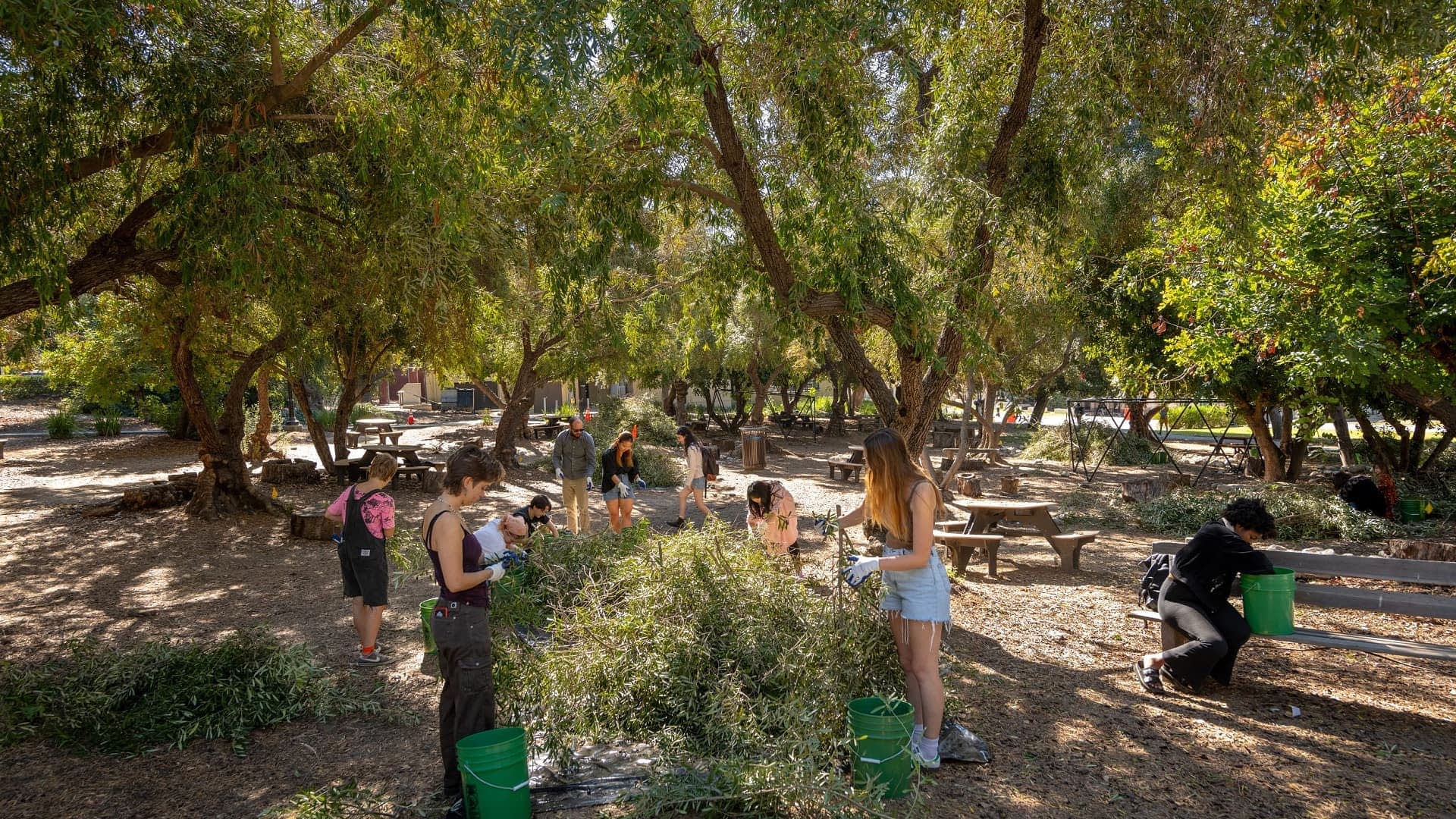
Occidental Harvest was inspired by a similar event at Scripps College. (Photo: Mark Campos, Occidental College)
Plans include inviting students and faculty to join the research and conservation process to make the olive picking season an annual tradition on campus.
During the harvest season, faculty members interested in making ink from campus olives also reached out to the Office of Sustainability, showcasing the many possibilities for an event like this.
““After a four-year hiatus in our Office of Sustainability, it was very rewarding to have this event usher in a new era of sustainability programming on campus,” Merrill said. “I can’t wait to see where future iterations of this new tradition on campus go.
Student participation also included designing the bottle label. “Working with a student to design the bottle label was one of my favorite parts of this project; “Alice Amdur’s creativity, talent and passion for art were contagious,” Merrill said. “I think this makes this year’s olive oil even more special.
““This was a great opportunity to bring together interests and talents across campus to create a product that is sustainable and locally sourced,” Linder concluded.
The annual olive harvest at UCLA has become a highly anticipated event that brings the campus community together in a spirit of collaboration and shared effort. Every year, students, faculty, and staff come together to hand-pick olives from the 120 olive trees that line the campus, turning the harvest into a celebration of sustainable agriculture and community bonding. The event not only provides an opportunity for participants to learn about the process of olive oil production but also serves as a reminder of the importance of environmental stewardship and the interconnectedness of the campus community.