


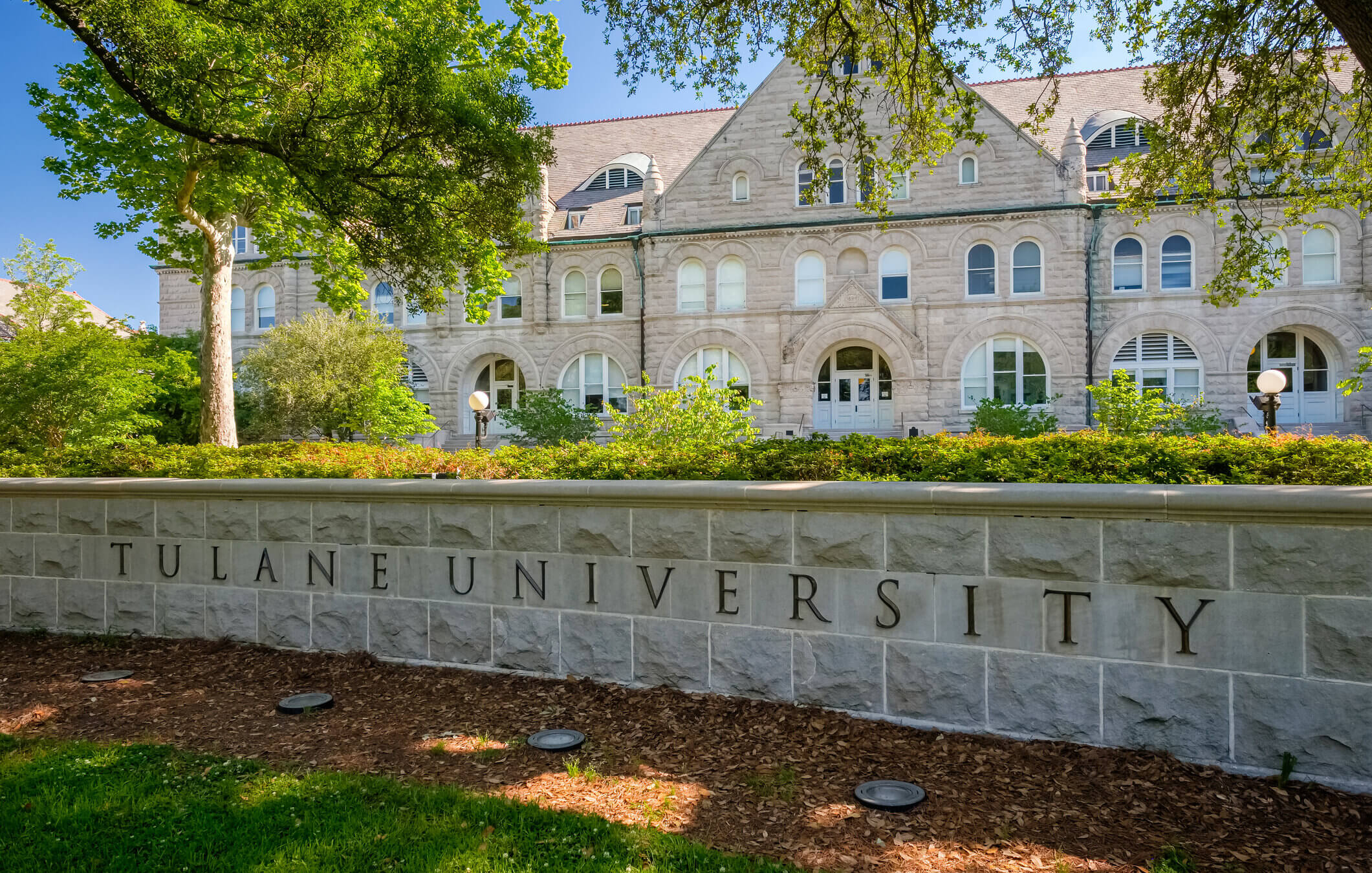
Tulane University was one of 12 schools out of 51 found to have the “least hostile” anti-Semitic environments in a new Brandeis survey. Image by iStock


Written by Pete Harpaz
December 15, 2023
A new survey of Jewish students finds that where they go to college makes a difference in whether and to what extent they encounter anti-Semitism.
The survey, which surveyed nearly 2,000 Jewish college students at 51 U.S. schools with significant Jewish populations, Published ThursdayIt was conducted online by Brandeis University from November 19 to December 11.
Columbia, the University of Pennsylvania and three campuses of the University of California were among the worst offenders in the survey. The list of schools with less hostile environments included Tulane in New Orleans, Washington University in St. Louis, and five schools in Florida.


The study was timed to measure the impact of the October 7 Hamas attacks and the Israeli war on Gaza. This conflict has led to a rise in anti-Semitism and anti-war activism across the United States, including pro-Palestinian protests and anti-Semitic incidents on several college campuses.
The students surveyed were drawn from applicants to Birthright Israel, which provides free trips to Israel for young people of Jewish heritage.
The researchers grouped the 51 schools into four categories, from most hostile environments to least anti-Semitic, but the schools were not ranked into each of the categories.
“Culture, policies, and other characteristics matter when it comes to promoting a safe and welcoming environment toward Jewish students,” the researchers wrote.
Results vary from one campus to another
Lead researcher Leonard Sacks, director of the Cohen Center for Modern Jewish Studies at Brandeis, said he was surprised by how big the differences were from one campus to the next.
In the 12 most hostile schools, 85% of Jewish students reported at least some hostility toward Jews, and 94% reported hostility toward Israel. In comparison, in the 13 schools considered to have the least hostile anti-Semitic environment, only 49% of Jewish students reported any hostility toward Jews, while 63% reported hostility toward Israel.
(There Ongoing debate On how to define anti-Semitism in relation to Israel).
While 57% of students in the most hostile environments said they were “very concerned” about anti-Semitism on campus, only 23% were very concerned in the least hostile schools.
Some of the findings may reassure worried parents. Less than 2% of students overall had experienced a physical anti-Semitic attack, and this did not differ significantly between schools. Regardless of campus, only 15% of participants reported that concerns about anti-Semitism affected their daily lives “often,” although 9% reported that these concerns affected their daily lives “all of the time.”
The worst criminals
The full list of the 12 schools with the “highest levels of anti-Semitism” out of the 51 schools surveyed, in alphabetical order, is:
- Boston University
- Colombia
- George Washington University
- New york university
- Ohio State-Columbus
- Queens College (part of the City University of New York)
- University of California, Berkeley
- University of California
- University of California-San Diego
- University of Pennsylvania
- University of Michigan-Ann Arbor
- University of Wisconsin-Madison.
Sachs noted that many of those 12 schools were in the news for pro-Palestinian activity or anti-Semitic incidents in the weeks after October 7. “I wonder to what extent her being in the news has exacerbated the problem,” Sachs said.
Colombia, for example, was like that Devastated by protests And outings. in GWU, pro-Palestinian slogansincluding those that appeared to glorify terrorists, were displayed at the library. UPenn president resigned Having said that, advocating the genocide of Jews may be permissible under a school’s code of conduct depending on the context.
And 39 other schools
At the other end of the scale, the 13 schools listed as least anti-Semitic were:
- Brandeis
- California Polytechnic State University
- duke
- Florida Atlantic University
- Florida State
- Pennsylvania state
- Tulane
- University of Central Florida
- University of Colorado Boulder
- University of Delaware
- University of Florida
- University of Miami
- University of Washington
In the second best category, the 13 schools with “below average” levels of anti-Semitism were:
- Indiana University-Bloomington
- Michigan State
- Northeast
- San Diego State
- Syracuse
- temple
- University of Arizona
- University of Georgia
- University of Maryland-College Park
- University of Pittsburgh
- University of Texas-Austin
- University of Virginia
- Vanderbilt.
Before the worst offenders, there were 13 schools with the second highest levels of anti-Semitism:
- Baruch College (part of the City University of New York)
- Binghamton University (part of the State University of New York)
- Cornell
- Emory
- Northwest
- Rutgers
- Tufts
- University of California at Davis
- University of California-Santa Barbara
- University of Illinois-Urbana/Champaign
- University of Massachusetts-Amherst
- University of Southern California
- University of Vermont.
Respondents are drawn from birthright applicants
To conduct the study, researchers contacted 22,735 people who applied to take a Birthright Israel trip this year. They were drawn from Birthright program applicants because the program attracts young Jews with “varying levels of prior involvement in Jewish life.” Of the 1,963 people whose data were used, 19% had no formal Jewish education in childhood and 25% attended Jewish day school.
on 20% of all American Jews between the ages of 18 and 46 have participated in a Birthright Israel trip.
Schools where there were not enough birthright applicants to allow reliable data were not included. (Harvard has repeatedly made headlines for allegations of campus anti-Semitism, but it was not among the 51 schools whose students were surveyed.) Students who applied for Birthright were included whether they ended up taking a Birthright trip or not. no.
The researchers asked participants about three things: their perceptions of anti-Jewish hostility and anti-Israelism on their campuses, and their concerns about anti-Semitism at their schools. It turned out that the answers to these questions were highly correlated, so they were combined into an overall measure of students’ perceptions of anti-Semitism on each campus.
Most of the hostility comes from other students
Eight in 10 students at the most hostile schools said the hostility came from other students, while 30% said the hostility came from faculty.
A third of students at those highly hostile schools said they felt they “pretty much” belonged on campus, and only a quarter felt safe or comfortable. In contrast, 43% of Jewish students in schools rated as less hostile felt “very” safe, nearly half felt “very” comfortable, and more than half said they felt “quite” like they belonged.
At schools with higher levels of anti-Semitism, 24% of students said they had personally experienced anti-Semitism on campus. But even in schools with the lowest levels of anti-Semitism, 14% of students reported having personally encountered an anti-Semitic insult or harassment in the past three months.
Left versus right
The survey found that students were more concerned about anti-Semitism from the political left than from the political right. More than half of the students surveyed described themselves as liberal, and 41% of those liberals said they were very concerned about anti-Semitism from the political left.
The result is consistent with Growth of pro-Palestinian activism on the left, Some of which were tinged with anti-Semitism. Much of it has condemned Israel and embraced anti-Zionism, which many mainstream Jewish groups believe is anti-Semitic.
But the researchers noted that Jewish students in this survey may have less exposure to right-wing anti-Semitism, given that many of the schools included are politically liberal.
Harassment, social media, stereotypes
In schools with the highest levels of anti-Semitism, Jewish students were “more likely to report being insulted or harassed in person and on social media,” including “seeing anti-Semitic images, slogans, or graffiti.”
In schools with the lowest levels of hostility, only 9% of participants reported that they were frequently blamed for the actions of the Israeli government, compared to 28% of students who said they were blamed in schools with high levels of hostility.
Students at all schools were also more “concerned about anti-Semitism associated with criticism of Israel than about anti-Semitism associated with traditional anti-Jewish stereotypes.”
Survey goal: Help the campus become safe
Brandeis has been conducting similar surveys for 20 years. Some of the levels of anti-Semitism reported in this survey were double what the last survey found in 2016.
Sachs said the purpose of the report was “not to write US News and World Report A guide to which universities to send a Jewish student to, but rather to help all universities become safe places and productive learning environments for Jewish students.
He noted that Duke, now among the least anti-Semitic schools, had in the past been “a target of investigation, but they have done a number of things to make the campus a better environment for Jewish students.”
Involving faculty in educational programs with multiple perspectives on the history of the Israeli-Palestinian conflict is among the steps that can be taken to improve campus culture, the report said.
methodology
The researchers adjusted responses from different schools to account for the number of students who responded to the survey. They did not provide a margin of error, but said the differences identified in the study were statistically significant, and that grouping schools into four categories rather than ranking them individually avoids bias due to small samples.
A recent survey of Jewish college students at 51 universities across the United States has revealed concerning levels of anti-Semitism on campus. The survey, conducted by The Forward, sheds light on the experiences of Jewish students who have faced discrimination and bigotry during their time at university. The findings highlight the importance of addressing and confronting anti-Semitism within higher education institutions, and the need for greater awareness and support for Jewish students. This survey serves as a crucial opportunity to bring attention to the prevalence of anti-Semitic incidents on college campuses and to work towards creating a more inclusive and respectful environment for all students.